Tuesday, 24 March 2026

There’s a certain comfort in having a plan.
Knowing where you’re going. What comes next. How things are supposed to unfold. It gives you a sense of control — like everything is moving in the right direction.
And most of the time, that’s what we aim for.
We plan our days, our trips, our decisions. We try to reduce uncertainty as much as possible, because uncertainty feels like risk. Like something could go wrong.
But every now and then, something unexpected happens.
You take a wrong turn. Miss an exit. Walk down a street you didn’t intend to. End up somewhere that wasn’t part of the plan.
And strangely, that’s where something shifts.
At first, there’s a moment of hesitation. A quick check — this wasn’t supposed to happen. But then, if you don’t rush to correct it, something else starts to take over.
You begin to notice things differently.
The details feel sharper. The experience feels more real. You’re no longer moving through something you already imagined — you’re actually inside it, figuring it out as it unfolds.
There’s no script to follow.
And because of that, there’s no expectation to meet either.
You’re just there.
It’s a different kind of awareness. One that doesn’t exist when everything is planned, because when things are planned, part of your attention is always ahead — thinking about what’s next.
But when you’re lost, your attention comes back to the present.
Not out of intention, but out of necessity.
And maybe that’s why it feels better sometimes.
Not because being lost is ideal. Not because plans don’t matter.
But because for a brief moment, you’re no longer trying to control the experience.
You’re just letting it happen.
And in that space, things feel lighter.
More open.
More real.
Like you’re not just moving through something —
but actually experiencing it.

There’s something about the night that changes the way we feel things.
During the day, everything is louder. There’s movement, conversations, things to do, places to be. Your attention is constantly pulled in different directions, and somehow, that keeps certain thoughts at a distance.
But at night, it gets quieter.
Not just around you — but inside your head.
And that’s usually when people start to show up again.
Not physically. Just in fragments.
A conversation you didn’t think about all day. A memory that didn’t seem important before. A random moment that suddenly feels heavier than it should.
It’s strange how someone you haven’t spoken to in years can cross your mind so clearly, as if nothing really changed.
Maybe it’s because there’s nothing left to distract you.
Or maybe it’s because nighttime slows everything down just enough for you to notice what’s been sitting quietly in the background.
During the day, we’re good at managing what we feel. We filter things, postpone thoughts, move on quickly. There’s always something else to focus on.
But the night doesn’t rush you like that.
It lets things linger.
And sometimes, that’s when you realize that missing someone isn’t always about wanting them back. It’s not always about fixing something or going back to how things were.
Sometimes, it’s just about acknowledging that they were there.
That they mattered in a way that doesn’t really disappear — even if everything else did.
There’s a kind of honesty that comes with that.
No distractions. No explanations. No need to turn it into something bigger than it is.
Just a quiet recognition.
And maybe that’s why it feels stronger at night.
Because for a few moments, there’s nothing else competing with it.
Monday, 23 March 2026
Most of the time, we don’t notice design.
Not really.
We move through places, interact with people, go through routines — and everything just feels normal. Familiar. Expected. Like it’s always been that way.
But every now and then, something small shifts.
You walk into a space you’ve been in before, and something feels… different. Not dramatically. Just enough to make you pause for a second longer than usual.
Maybe it’s the lighting. The texture. The way something fits together more thoughtfully than you expected.
Or sometimes, it’s something as simple as what someone is wearing.
There’s a quiet kind of impact that design has. It doesn’t demand attention — it changes how something feels without asking for it.
And that’s easy to overlook, especially in places we don’t expect it.
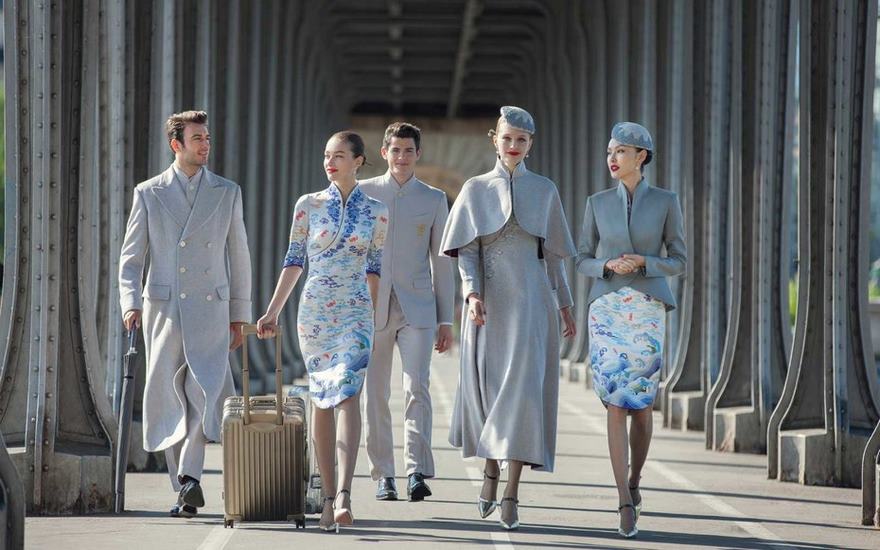
Air travel, for example, is something most of us experience on autopilot. Airports, boarding gates, cabin announcements — it’s all structured, efficient, predictable.
You don’t usually associate it with intention or expression.
But then something shifts.
You notice details you wouldn’t normally pay attention to. The way uniforms are designed. The way colors are chosen. The way everything feels slightly more considered.
And suddenly, the experience feels different.
Not because the flight itself changed. Not because anything became easier.
But because the feeling of it did.
It’s strange how something so functional can become something a little more human — just through attention to detail.
Maybe that’s what design really does.
It doesn’t just make things look better.
It makes moments feel different.
It turns something routine into something slightly more memorable.
Something forgettable into something you pause to notice.
And most of the time, it’s not the big changes that do this.
It’s the small, almost invisible ones.
The kind you wouldn’t think matter — until they do.

There’s something quietly fascinating about people who make things with their hands.

Not just because of what they create — but because of what it takes to get there.
Most of us have ideas. Small ones, big ones, things we think about starting “someday.” But for one reason or another, they stay where they are — unfinished, untested, untouched.
And then there are people who don’t let that happen.
You hear about someone who spends their nights building something from scratch — after long days of doing something completely unrelated — and it makes you pause for a moment. Not in a loud, dramatic way. Just enough to think, how do they keep going?
It’s not always about talent. Or even time.
It’s something else.
Maybe it’s the way they hold on to an idea long enough for it to become real. Or the way they’re willing to sit through the slow, repetitive parts that most people lose patience with.
Because creating something from nothing is rarely exciting in the beginning.
It’s usually quiet. Messy. Uncertain.
And often, it happens in the margins of life — late at night, on weekends, in between responsibilities that can’t be ignored.
There’s something honest about that.
About choosing to build something when no one is watching. When there’s no guarantee it will work. When it would be easier to just let it go.
And maybe that’s why handmade things feel different.
Not because they are perfect — but because they carry time inside them. Attention. Repetition. Small decisions that add up into something whole.
You can sense it, even if you can’t explain it.
It’s not just an object anymore. It’s a process you didn’t see.
And when you come across someone who has done that — turned an idea into something real, slowly and quietly — it stays with you a little longer than expected.
Not because of what they made.
But because of what it reminds you of.
That something can begin with almost nothing…
and still become something meaningful, if someone decides not to let it go.
Some conversations end, but don’t really leave.
You walk away, go back to your day, meet other people, do other things — but something about that one exchange lingers. Not loudly. Not constantly. Just… there. Quietly sitting somewhere in your mind, waiting to be remembered at random moments.
It’s strange, because most conversations don’t last beyond the moment they happen. You forget what was said, sometimes even who said it. But then there are a few — rare ones — that stay with you for years.

It’s usually not about how long the conversation was. In fact, some of them are surprisingly short. A few minutes. A passing remark. Something said casually, without much weight at the time.
But something in it lands.
Maybe it’s the timing. You hear something exactly when you needed to, even if you didn’t realize you needed it. Or maybe it’s the honesty — the kind that isn’t dressed up or filtered. Just raw enough to feel real.
Sometimes it’s because, for a brief moment, you felt completely understood. Not in a dramatic way. Just in a quiet, effortless way where you didn’t have to explain yourself too much.
And that’s rare.
We go through most of our days speaking in layers — adjusting what we say, how we say it, how much we reveal. So when a conversation slips past all that and feels simple and real, it leaves a mark.
Not because it changed your life in some big, obvious way.
But because it made you pause.
And maybe that’s all it takes.
A small moment of clarity.
A sentence that stayed longer than it should have.
A feeling that didn’t fade with the rest of the day.
Most conversations are just part of time passing.
But some of them, for reasons we don’t always understand, become part of us.

Social Media
Search