Most of the time, we don’t notice design.
Not really.
We move through places, interact with people, go through routines — and everything just feels normal. Familiar. Expected. Like it’s always been that way.
But every now and then, something small shifts.
You walk into a space you’ve been in before, and something feels… different. Not dramatically. Just enough to make you pause for a second longer than usual.
Maybe it’s the lighting. The texture. The way something fits together more thoughtfully than you expected.
Or sometimes, it’s something as simple as what someone is wearing.
There’s a quiet kind of impact that design has. It doesn’t demand attention — it changes how something feels without asking for it.
And that’s easy to overlook, especially in places we don’t expect it.
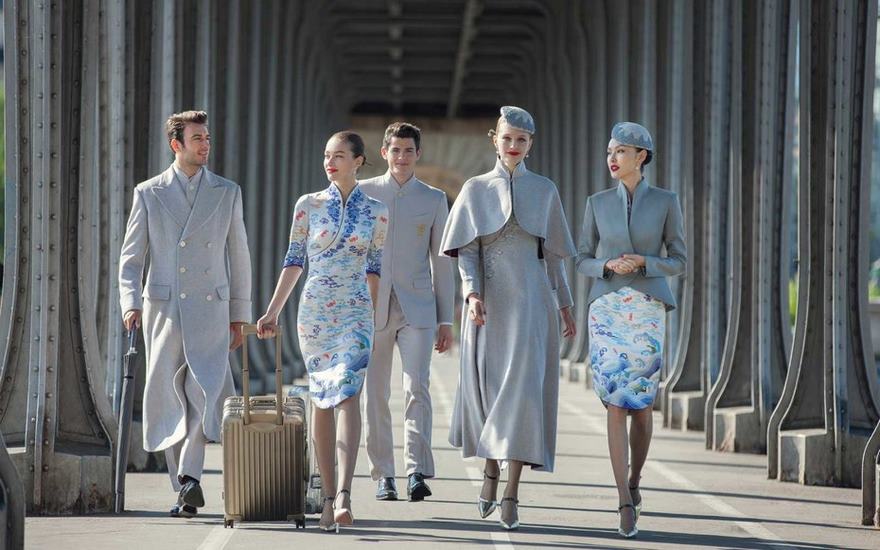
Air travel, for example, is something most of us experience on autopilot. Airports, boarding gates, cabin announcements — it’s all structured, efficient, predictable.
You don’t usually associate it with intention or expression.
But then something shifts.
You notice details you wouldn’t normally pay attention to. The way uniforms are designed. The way colors are chosen. The way everything feels slightly more considered.
And suddenly, the experience feels different.
Not because the flight itself changed. Not because anything became easier.
But because the feeling of it did.
It’s strange how something so functional can become something a little more human — just through attention to detail.
Maybe that’s what design really does.
It doesn’t just make things look better.
It makes moments feel different.
It turns something routine into something slightly more memorable.
Something forgettable into something you pause to notice.
And most of the time, it’s not the big changes that do this.
It’s the small, almost invisible ones.
The kind you wouldn’t think matter — until they do.

Social Media
Search