24 March

There’s a certain comfort in having a plan.
Knowing where you’re going. What comes next. How things are supposed to unfold. It gives you a sense of control — like everything is moving in the right direction.
And most of the time, that’s what we aim for.
We plan our days, our trips, our decisions. We try to reduce uncertainty as much as possible, because uncertainty feels like risk. Like something could go wrong.
But every now and then, something unexpected happens.
You take a wrong turn. Miss an exit. Walk down a street you didn’t intend to. End up somewhere that wasn’t part of the plan.
And strangely, that’s where something shifts.
At first, there’s a moment of hesitation. A quick check — this wasn’t supposed to happen. But then, if you don’t rush to correct it, something else starts to take over.
You begin to notice things differently.
The details feel sharper. The experience feels more real. You’re no longer moving through something you already imagined — you’re actually inside it, figuring it out as it unfolds.
There’s no script to follow.
And because of that, there’s no expectation to meet either.
You’re just there.
It’s a different kind of awareness. One that doesn’t exist when everything is planned, because when things are planned, part of your attention is always ahead — thinking about what’s next.
But when you’re lost, your attention comes back to the present.
Not out of intention, but out of necessity.
And maybe that’s why it feels better sometimes.
Not because being lost is ideal. Not because plans don’t matter.
But because for a brief moment, you’re no longer trying to control the experience.
You’re just letting it happen.
And in that space, things feel lighter.
More open.
More real.
Like you’re not just moving through something —
but actually experiencing it.
23 March
Most of the time, we don’t notice design.
Not really.
We move through places, interact with people, go through routines — and everything just feels normal. Familiar. Expected. Like it’s always been that way.
But every now and then, something small shifts.
You walk into a space you’ve been in before, and something feels… different. Not dramatically. Just enough to make you pause for a second longer than usual.
Maybe it’s the lighting. The texture. The way something fits together more thoughtfully than you expected.
Or sometimes, it’s something as simple as what someone is wearing.
There’s a quiet kind of impact that design has. It doesn’t demand attention — it changes how something feels without asking for it.
And that’s easy to overlook, especially in places we don’t expect it.
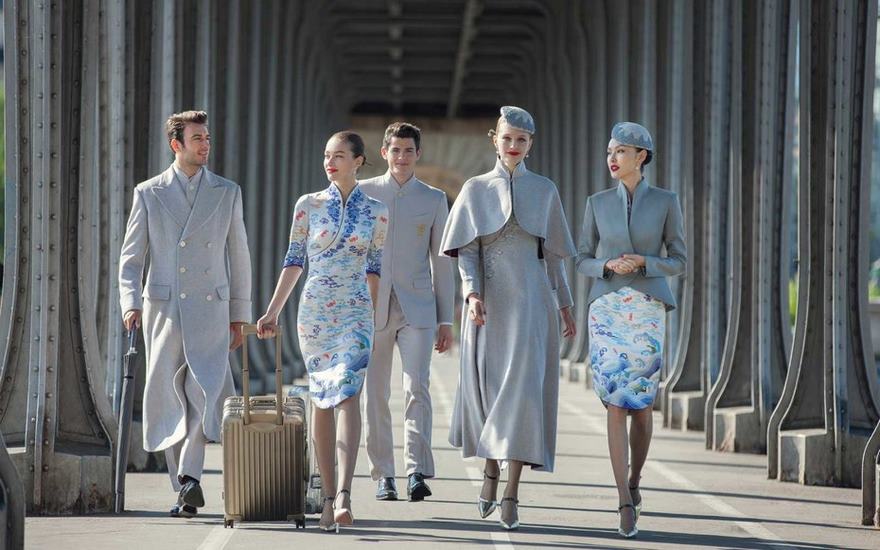
Air travel, for example, is something most of us experience on autopilot. Airports, boarding gates, cabin announcements — it’s all structured, efficient, predictable.
You don’t usually associate it with intention or expression.
But then something shifts.
You notice details you wouldn’t normally pay attention to. The way uniforms are designed. The way colors are chosen. The way everything feels slightly more considered.
And suddenly, the experience feels different.
Not because the flight itself changed. Not because anything became easier.
But because the feeling of it did.
It’s strange how something so functional can become something a little more human — just through attention to detail.
Maybe that’s what design really does.
It doesn’t just make things look better.
It makes moments feel different.
It turns something routine into something slightly more memorable.
Something forgettable into something you pause to notice.
And most of the time, it’s not the big changes that do this.
It’s the small, almost invisible ones.
The kind you wouldn’t think matter — until they do.

Social Media
Search